
Industrial AI Strategy at Scale, How to Scale Industrial AI in Manufacturing

Why industrial AI strategy at scale is critical for digital transformation in manufacturing
Industrial organizations are rapidly adopting artificial intelligence to improve efficiency, reduce downtime, and optimize operations. However, while many companies successfully implement pilot projects, far fewer are able to scale these initiatives across the enterprise. This gap between experimentation and large scale deployment has become one of the defining challenges of industrial AI in manufacturing.
An effective industrial AI strategy at scale requires more than deploying models or running isolated analytics projects. It demands a transformation in how data, systems, and operations are connected. As organizations pursue digital transformation with industrial AI, the ability to scale becomes the key differentiator between incremental improvement and sustained competitive advantage.
The challenge of scaling industrial AI in manufacturing environments
Despite strong initial results, many industrial AI initiatives fail to move beyond pilot stages. This is not due to limitations in technology, but rather structural challenges within industrial environments.
The most common barriers to scaling industrial AI include fragmented data systems, inconsistent architectures, and limited integration between operational technology and enterprise IT platforms. In many cases, data is stored across historians, SCADA systems, and enterprise applications without a unified structure, making it difficult to apply AI models consistently.

Without addressing these challenges, organizations struggle to extend AI driven insights beyond individual assets or production lines, limiting the overall impact of their investments.
Industrial data strategy as the foundation for scaling industrial AI
A successful industrial AI strategy at scale begins with a strong industrial data strategy. Data must be unified, contextualized, and accessible across the organization to support advanced analytics and AI applications.
This involves integrating real time and historical data from industrial systems and organizing it in a way that reflects operational context. By linking data to assets, processes, and production states, organizations can create a foundation that supports industrial predictive analytics and scalable AI models.
Solutions from AVEVA play a central role in enabling this transformation. With platforms such as AVEVA Historian, organizations can capture and manage large volumes of time series data, forming the backbone of industrial AI architecture.
Standardized industrial AI architecture for scalable manufacturing operations
Standardization is essential for scaling industrial AI in manufacturing. Without a consistent architecture, each deployment becomes a custom project, increasing complexity and limiting scalability.
A standardized industrial AI architecture enables organizations to replicate successful use cases across multiple plants and assets. This includes common data models, reusable analytics frameworks, and consistent integration patterns between OT and IT systems.
With AVEVA System Platform, organizations can create structured environments that support this level of standardization. By modeling assets and processes in a unified way, companies can deploy AI capabilities consistently and efficiently across their operations.
Embedding industrial AI into manufacturing operations and decision making
To deliver value, industrial AI must be embedded directly into operational workflows. Standalone analytics tools and dashboards are not sufficient to drive meaningful change. Instead, AI must be integrated into the systems that control and manage industrial processes.
This includes embedding predictive models into maintenance systems, integrating quality analytics into production processes, and delivering real time insights through visualization platforms such as AVEVA InTouch HMI.
By embedding AI into day to day operations, organizations ensure that insights are translated into action, enabling faster and more effective decision making across the enterprise.

Aligning industrial AI strategy with business outcomes in manufacturing
A key success factor in industrial AI strategy at scale is alignment with business objectives. Organizations must focus on measurable outcomes such as reducing downtime, improving throughput, enhancing quality, and optimizing energy usage.
By linking AI initiatives to these goals, companies can prioritize high impact use cases and demonstrate clear return on investment. This approach ensures that AI in manufacturing operations is driven by business value rather than technical experimentation.
Governance and security in industrial AI and digital transformation
As AI systems scale, governance becomes increasingly important. Organizations must ensure that data is accurate, models are reliable, and systems are secure.
This requires a comprehensive approach to industrial AI governance, including data management policies, model validation processes, and cybersecurity measures. Strong governance ensures consistency, builds trust in AI outputs, and supports long term scalability.
The role of AVEVA industrial AI solutions and ecosystem partners
Scaling industrial AI in manufacturing requires a robust technology ecosystem. Solutions from AVEVA provide the foundation for integrating data, standardizing architectures, and deploying AI capabilities across industrial environments.
Equally important is the role of implementation expertise. ACE South East Europe helps organizations design and implement scalable industrial AI strategies, ensuring that solutions are aligned with operational requirements and business goals.
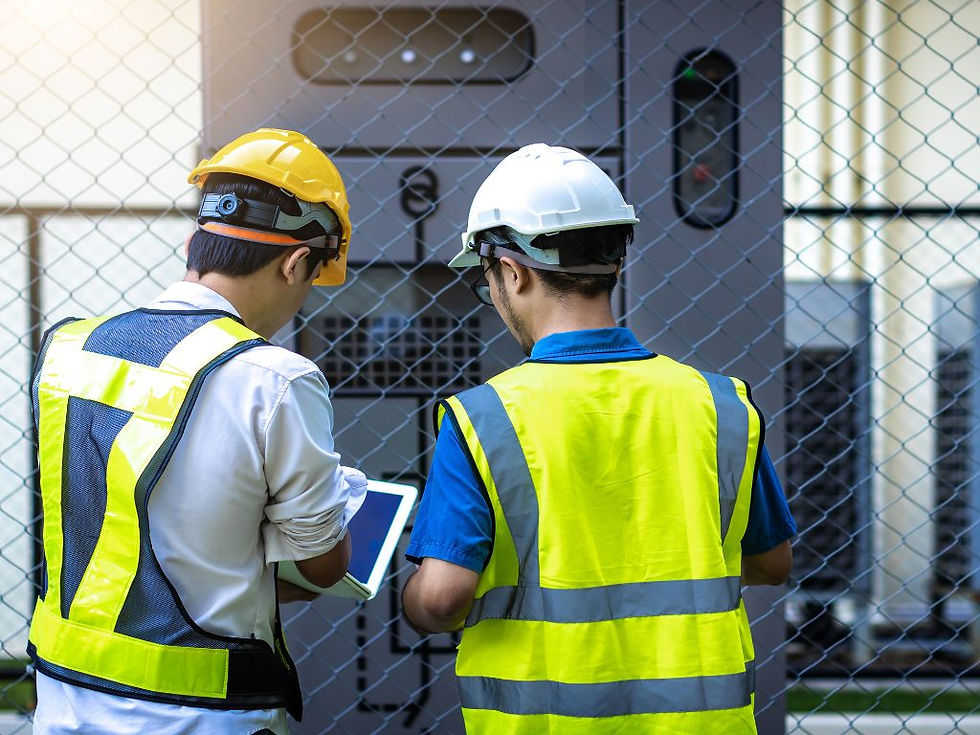
The future of industrial AI at scale in manufacturing
As industrial organizations continue to invest in digital transformation, the importance of industrial AI at scale will only increase. Companies that successfully build scalable architectures will be able to leverage data more effectively, optimize operations continuously, and respond more quickly to changing conditions.
In contrast, those that fail to scale AI will remain limited to isolated improvements, missing out on the broader benefits of enterprise wide transformation.
The bottom line, scaling industrial AI as a competitive advantage
An effective industrial AI strategy at scale is not about deploying more models. It is about building a connected, standardized, and data driven environment where AI can operate consistently across the enterprise.
With the right industrial data strategy, architecture, and implementation approach, organizations can transform AI from a series of experiments into a core operational capability that drives efficiency, resilience, and long term growth.
Ready to scale Industrial AI across your operations? Discover how AVEVA and ACE South East Europe can help you build a scalable industrial AI strategy. 👉 Talk to our subject matter experts.


Comments